Another Lesson in Lime
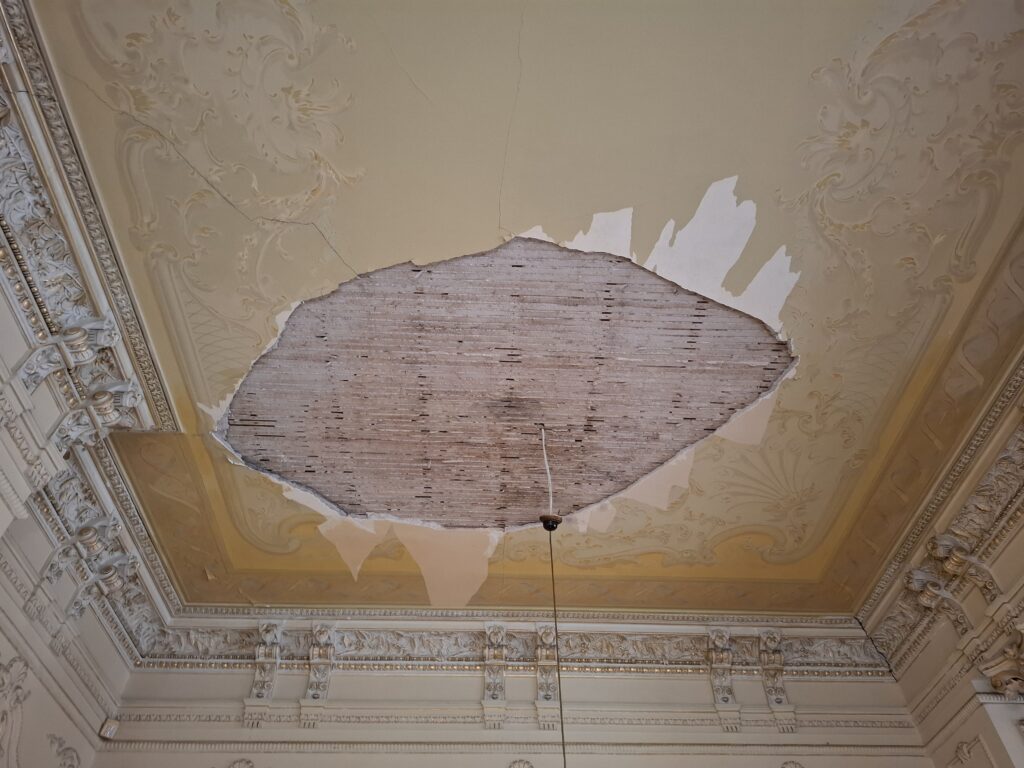
Feature Image: Labassa ceiling after damage, 2026
On June 6 this year, a section of ceiling plaster in the Labassa Drawing Room was found to have detached and fallen to the floor. The areas above were inspected for leaks and none were found, but investigation of the damaged plaster showed that there were two types of plaster present in this area.
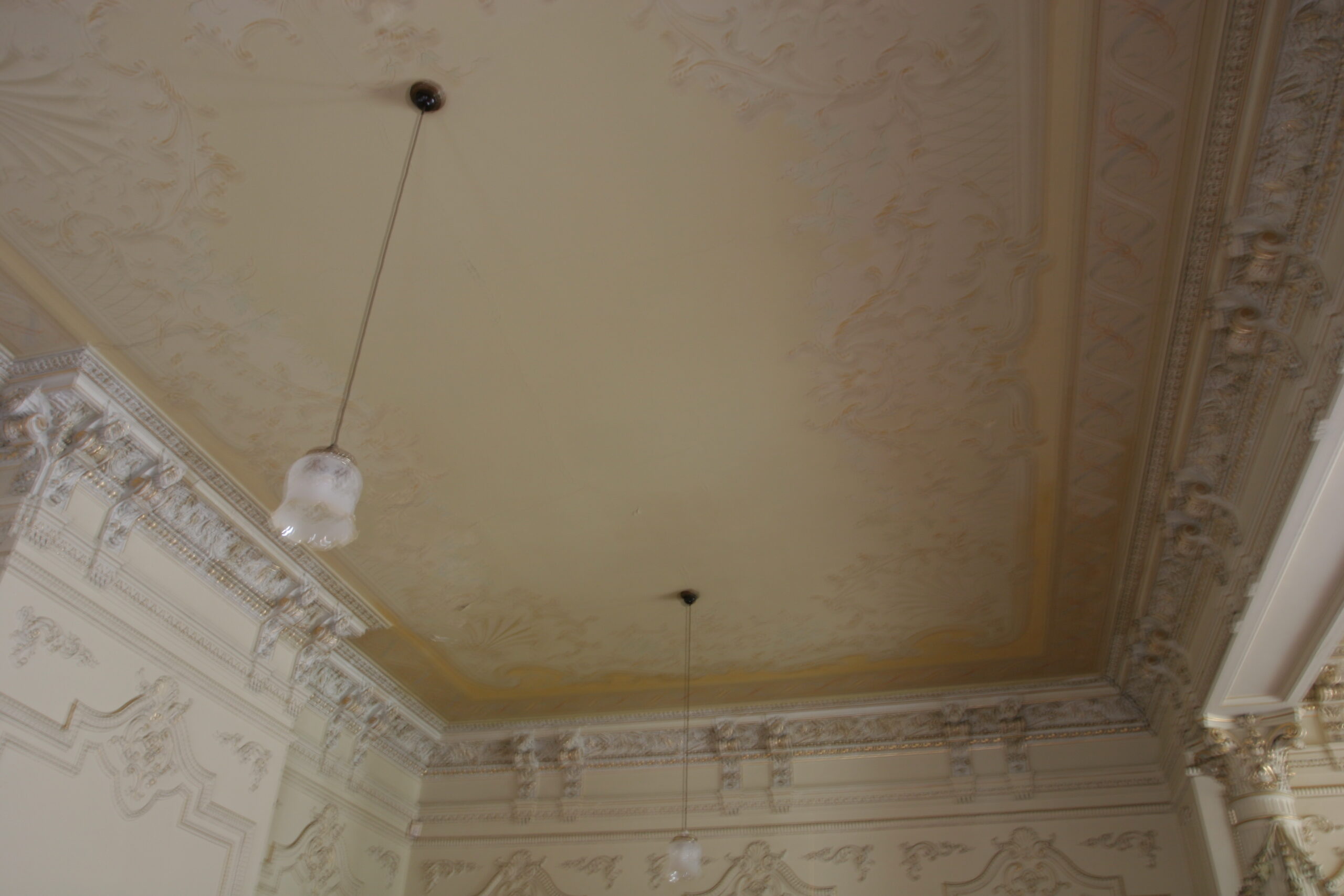
Image: Labassa ceiling before damage.
The damage which has occurred in the drawing room can likely be attributed to a plaster repair a couple of decades ago, which was completed using a mix made of gypsum and sand, instead of a traditional lime (as calcium oxide) and animal hair. The gypsum mix is completely different – heavier and more rigid – which is why it has come down with no clear signs beforehand.
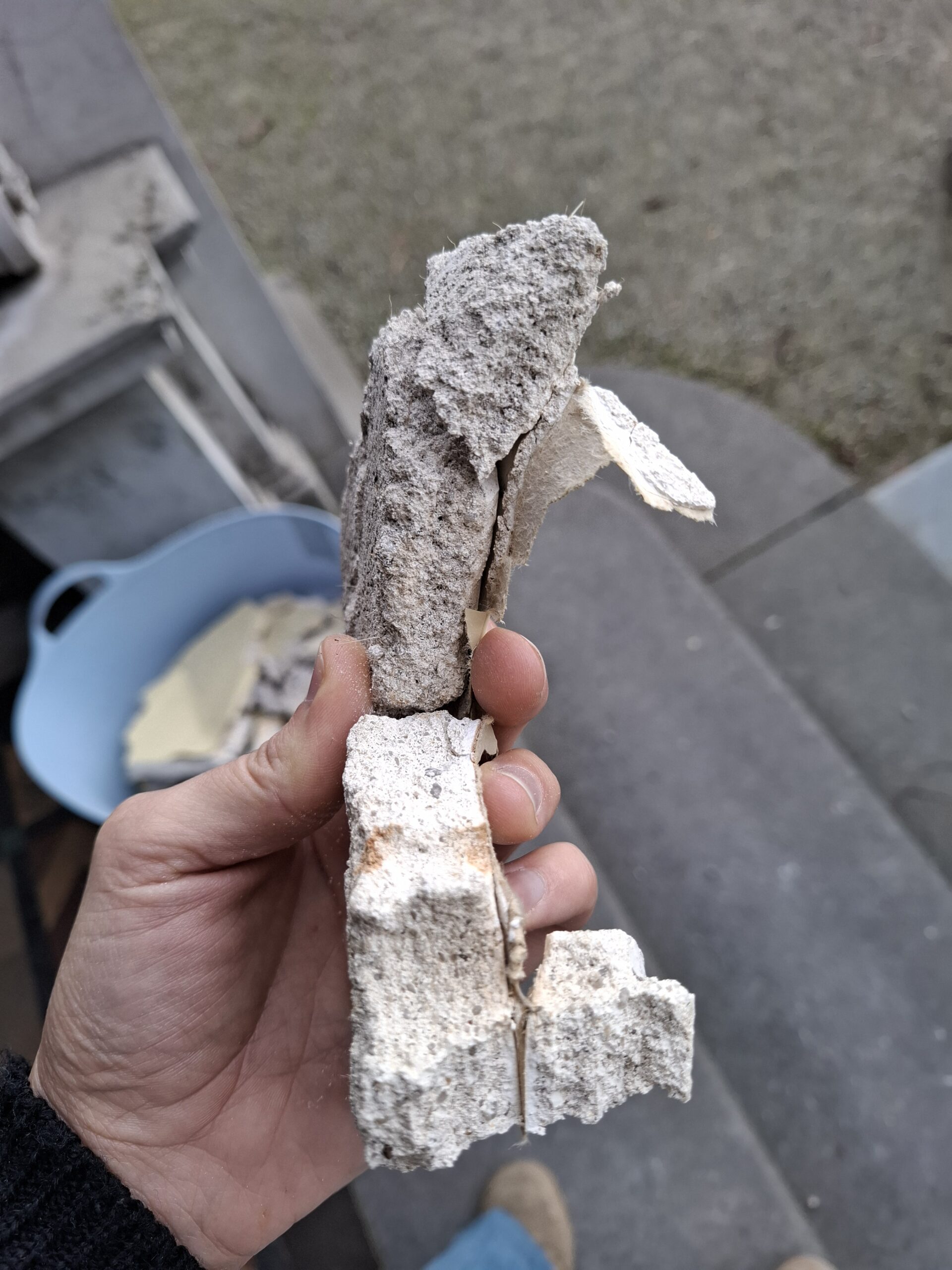
Image: Difference between original plaster (top) and previous repair (bottom)
Works have now commenced to remove the remaining sand and gypsum plaster to ensure that the ceiling is safe. This is mostly what has already come down, however an image from the 1980s shows a wider area of repair which will be inspected now. The timber lathes, which the plaster attaches too are all in-tact and secure, so the plasterer will apply a scratch coat of lime, water and hair (we will try to get natural but may need to be synthetic) to stabilise the ceiling.
Once the scratch coat is completed and carbonates (hardens) it will have secured into the back of the timber lathes as shown in the image below.
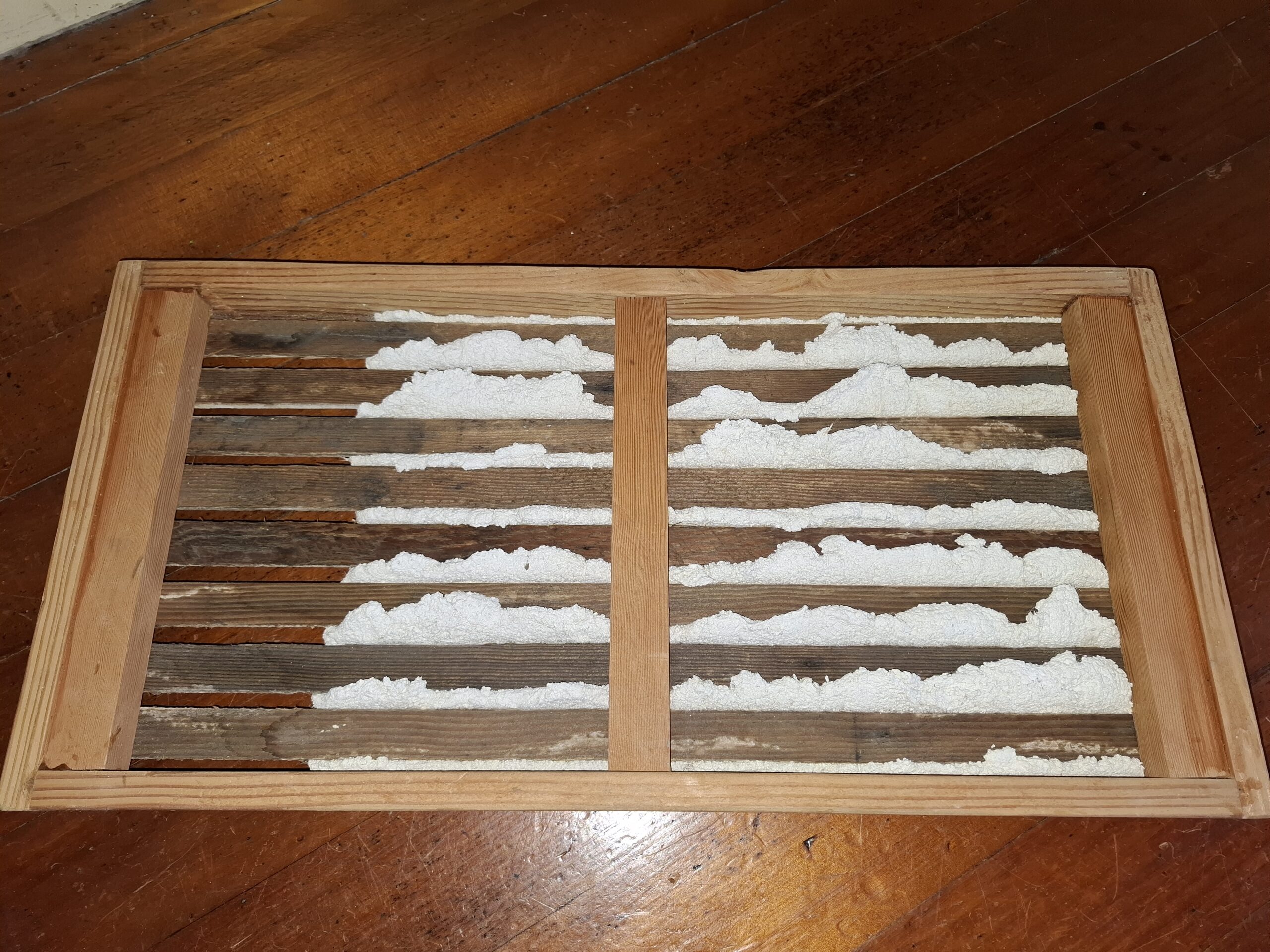
Image: Rear side of of timber laths showing how the plaster attached to the ceiling
This damage highlights the importance of using compatible materials when making repairs and supporting traditional skilled practitioners to do so.
Please support our Heritage Services Directory by spreading the word and encouraging heritage practitioners to list their businesses, if you are a practitioner who would like to learn more about the use of lime in traditional buildings, please reach out to us at [email protected].
+ There are no comments
Add yours