Reframing Defence Estate Management: Why Heritage Must Be Central, Not Peripheral
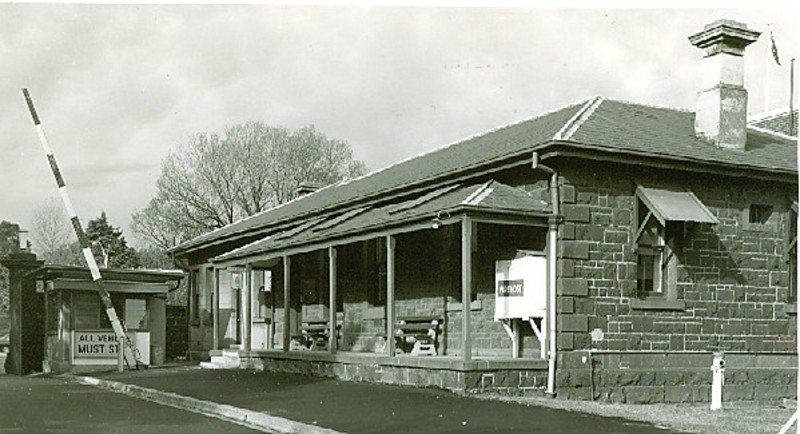
Feature Image: Former Guard House, Victoria Barracks, St Kilda Rd, Southbank.
The National Trust of Australia (Victoria) has made a submission to the Senate Foreign Affairs, Defence and Trade References Committee as part of its Inquiry into the Management of Defence Estate Assets.
This Inquiry was called following the 4 February 2026 release of the Defence Estate Audit Report and the announcement by Richard Marles, Minister for Defence, that 67 Defence owned assets across Australia would be wholly or partially divested. Review of the Defence Estate Audit – Delivering the Future Estate, 2025 revealed that heritage management within the Department of Defence does not take a holistic and strategic approach and is limited to minimum statutory compliance.
Bigger Picture Outcomes of the Inquiry
This divestment process has highlighted for us, a fundamental issue at the federal level – a glaring absence of cultural heritage in the remit and policies across government, not just in the Department of Defence.
As a custodian of public land and places with significant cultural values, the Federal Government has a responsibility to follow and provide leadership in best practice heritage and asset management.
Not having a clear focus on Australia’s cultural heritage and the valuing, management and celebration of it embedded in policy and practice, is a significant gap. It is pertinent that the Defence divestment process and this Inquiry address this gap.
Our Submission
At its core, our submission challenges a long-standing assumption within government systems: that heritage is an obstacle to efficient asset management. Instead, we argue the opposite—heritage, when properly integrated, is a powerful asset that strengthens sustainability, informs better decision-making, and delivers long-term value for both Defence and the broader community.
The Defence Estate is vast and complex, encompassing sites of Commonwealth, national, state, and local heritage significance. These places represent layers of Australia’s cultural, military, and social history. From built structures and landscapes to collections and intangible heritage, the Estate carries meaning that extends well beyond operational use. As such, the National Trust argues that these values must be fully understood and embedded across all aspects of planning, management, utilisation, and divestment.

Image: Laverton RAAF Base Source Defence, Australian Government.
The National Trust makes the following key recommendation to the Department of Defence:
- Establish a divestment taskforce embedded with multidisciplinary heritage expertise, to ensure that the process generates the highest quality outcomes including best-practice heritage activation, community benefit and financial return.
- Establish a dedicated heritage unit in the Defence Estate team that is funded and staffed by qualified heritage professionals to undertake a comprehensive assessment of heritage values across the Estate (local, state, and Commonwealth), who provide strategic and statutory guidance for built and landscape heritage and collections, and implement consistent policies for management, maintenance, monitoring, and divestment.
- Implement significantly improved asset management processes in parallel with divestment, ensuring systemic issues are addressed rather than perpetuated, and assets represent excellent heritage management as a core practice – key to any future divestment activity.
- Revise divestment policy frameworks to enable consideration of options for best public and community uses of surplus Defence land, including to local and state government agencies.
Importantly, the National Trust does not oppose the reduction of the Defence Estate. We acknowledge that divestment, if approached strategically, can deliver meaningful community benefits. Surplus Defence land presents opportunities for adaptive reuse, public access, and partnerships with local and state governments. However, these outcomes are only achievable if the divestment process is transparent, inclusive, and informed by a comprehensive understanding of heritage values.
Ultimately, the challenges facing the Defence Estate are not isolated—they are systemic and longstanding. Divestment alone will not resolve them. What is needed is a fundamental shift towards integrated, well-resourced, and expert-led management practices. Without this shift, the significant heritage values within the Estate will remain at risk, and the full potential of divestment will not be realised.
Conclusions
As Australia looks to the future of its Defence Estate, the message is clear: heritage is not a burden to be managed—it is an opportunity to be embraced. Our submission has underscored the importance of stewardship, accountability, and long-term thinking in managing public assets of cultural significance.
This divestment process provides a great opportunity for Defence to set an example and show leadership in the management of Australia’s heritage by:
- Focusing on controls and statutory obligations
- And, most significantly, by championing heritage and demonstrating how it can be shared and celebrated for the benefit of all Australians.
It is also time to take a nation building view through the establishment of a Department for Heritage that will preserve and enliven Australia’s heritage for now and tomorrow.
You can read the National Trust’s full submission to the Inquiry here.
Published submissions to the Inquiry can be found on the inquiry webpage along with an outline of who is giving evidence on what dates at the Inquiry hearings. You can also follow along, or catch up on recordings of the hearings, via the Parliamentary Youtube Channel.
The reporting date for the Inquiry has been extended to 15 September 2026.
+ There are no comments
Add yours